
The Short Answer
Your garage door is almost certainly the weakest wall on your house, and the fix is a mix of hardware checks and smart habits: tighten and inspect the track hardware, test the springs and rollers, seal the bottom and side gaps, and make sure the opener has a battery backup before the first big wind event of the season rolls through. Do that now, in October, and you won't be troubleshooting a bowed panel during a storm.
Why the Garage Door Takes the Hit
A standard exterior wall is a solid, braced structure. A garage door is a large moving panel held in place by tracks, rollers, hinges, and two torsion or extension springs fighting against wind pressure. When a storm front pushes air against the front of your house, that pressure concentrates on the biggest, least rigid surface available — the door. If the door flexes, bows, or blows in, the sudden pressure change inside the garage can stress the roof structure and interior walls. This is why building codes in high-wind regions require wind-rated garage doors; even outside those zones, the physics don't change.
Elk Grove's weather pattern makes this relevant twice a year. Summer and early fall bring dry heat, dust, and occasional wildfire smoke that dries out seals and weatherstripping. Then, as the season turns, winter storm systems move through the Central Valley with heavy rain and gusty wind, sometimes arriving back-to-back. A door that's been baking and drying out all summer is not automatically ready for that shift.
Symptoms That Mean Your Door Won't Hold Up
- Visible daylight around the top or sides of the closed door — a sign the seal has shrunk or the door isn't seated correctly in the track.
- A door that sways or flexes when you push on it from outside, especially on older steel doors without internal bracing.
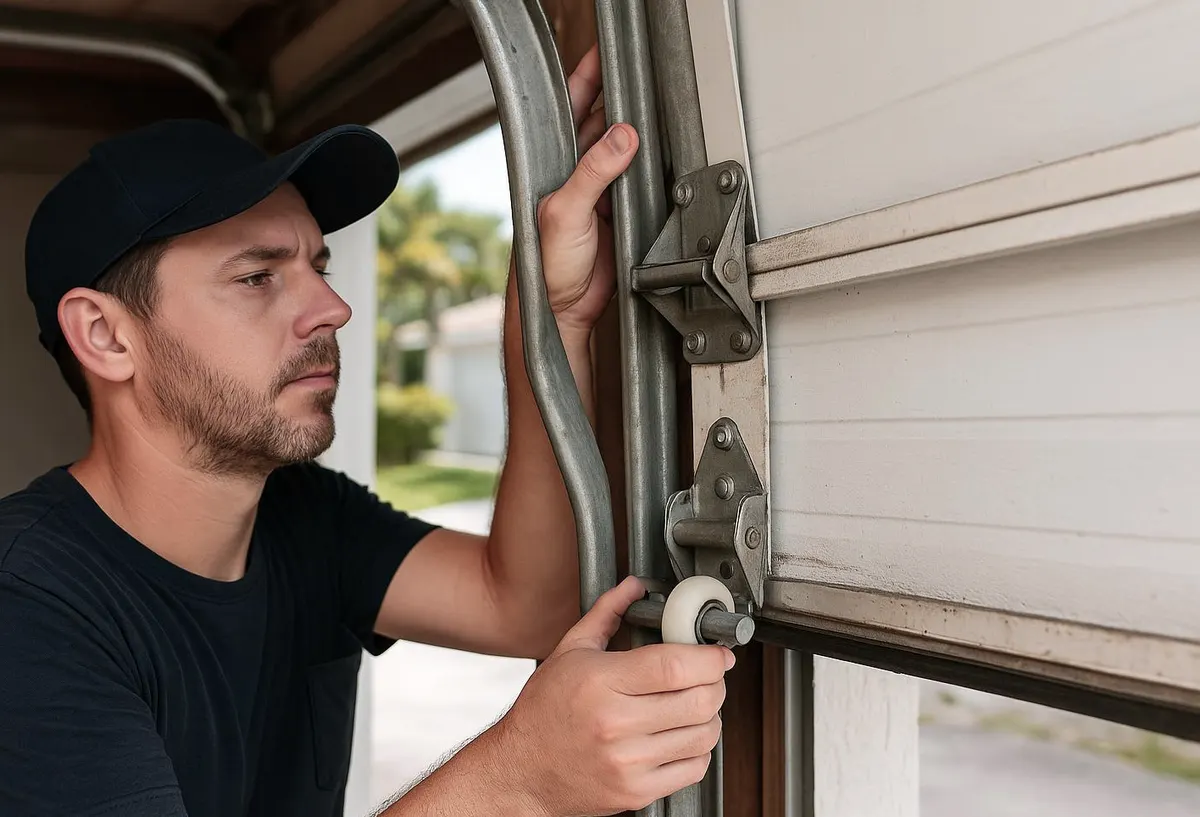
- Rollers that look worn, chipped, or loose in the track, which lets the door shift under wind load instead of staying locked in place.
- Rust or pitting on the torsion spring or hardware, which weakens the metal right when it needs to hold tension against gusts.
- A struggling or noisy opener, which often means the opener is already compensating for a door that's out of balance — not a good combination during a storm when you need it to work reliably.
A Real Pre-Storm Checklist
- Inspect and lubricate hardware. Hinges, rollers, and tracks should move smoothly. Dry, dusty summer air leaves grit in the tracks; clean it out before adding lubricant, not just on top of it.
- Check spring tension and condition. Springs that look stretched, rusted, or uneven side-to-side are a liability in high wind because they're what keeps the door rigid when closed. If one spring is worn, replace both — mismatched springs strain the opener and throw off the door's balance.
- Replace worn weatherstripping. The bottom seal and side seals block wind-driven rain and reduce the gap wind can exploit. This is inexpensive and makes a noticeable difference during winter storms.
- Tighten all hardware. Track brackets, hinges, and roller brackets loosen over a hot, dry summer as metal expands and contracts. A few minutes with a wrench before the rain starts is worth it.
- Test manual release and backup power. Winter storms in this region often come with power outages. Know how to manually open your door, and if your opener doesn't already have battery backup, this is the season to add one.
- Consider a reinforcement kit for older doors. Horizontal struts bolted to the inside of the panels add rigidity without replacing the whole door. This is a lower-cost option (national retail kits typically run under $100 in parts) compared to full replacement, though it won't bring an old door up to a true wind-rated standard.
The Bigger Trade-Off: Reinforce or Replace
If your door is original to an older home and already shows wear on the springs, tracks, or panels, reinforcement kits buy time but don't solve an aging opener or a door that's near the end of its service life. A new installation with wind-rated panels and a modern opener with battery backup is a bigger upfront cost but removes the guesswork each storm season. For most homeowners, the practical path is: reinforce and maintain a door that's structurally sound, and replace one that's already flexing, rusting, or requiring repeat repairs.
When to Call Elk Grove Garage Door
If you've checked the hardware and still see flex in the panel, hear grinding from the springs, or your opener struggles to lift the door evenly, that's the point to call in a technician rather than keep adjusting it yourself — torsion springs in particular store enough tension to cause serious injury if handled without the right tools. Elk Grove Garage Door handles spring replacement and full garage door maintenance visits that cover exactly the checklist above: hardware inspection, lubrication, weatherstripping replacement, and balance testing, so the door is actually ready before the next storm front rather than just assumed to be fine. If a storm already caught you off guard and the door won't open or close safely, our emergency garage door service covers that situation directly.
If you're in Elk Grove, CA or nearby and want your garage door checked before the winter rain and wind arrive, call Elk Grove Garage Door to schedule a maintenance visit now while there's still time to fix small problems before they become storm-day emergencies.